
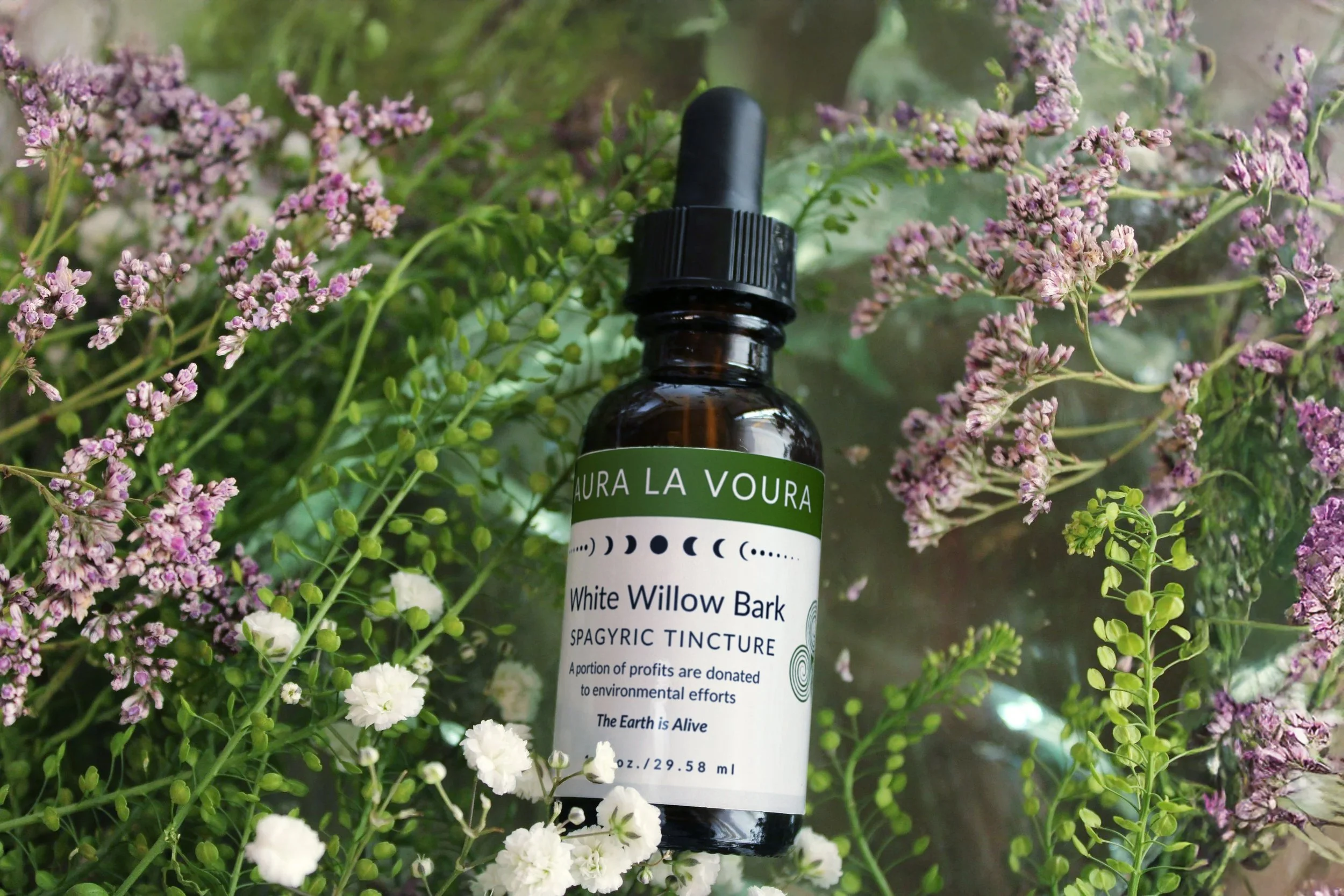
White Willow Bark (Salix alba) is one of the oldest recorded herbs for easing discomfort, and supporting the body's natural swelling responses. In my personal experience, of taking White Willow Bark, I have noticed my headaches ease and at times, disappear.
White Willow Bark Contains salicin — a naturally occurring compound that later inspired the development of aspirin. As well as salicortin, catechin and epicatechin*
This beautiful tree is admired not only for its practical uses but for its symbolism of resilience. Flexible yet strong, the willow bends with the wind without breaking. A reflection of the comfort and adaptability the herb was believed to offer the human body.
Ingredients: White Willow Bark (Salix alba) | Mineral Salts | White Vinegar | Certified Organic Cane Alcohol (70-85%) & Distilled Water
Ratio 1:3
This statement has not been evaluated by the Food and Drug Administration. This product is not intended to diagnose, treat, cure, or prevent any diseases.
White Willow Bark (Salix alba) is one of the oldest recorded herbs for easing discomfort, and supporting the body's natural swelling responses. In my personal experience, of taking White Willow Bark, I have noticed my headaches ease and at times, disappear.
White Willow Bark Contains salicin — a naturally occurring compound that later inspired the development of aspirin. As well as salicortin, catechin and epicatechin*
This beautiful tree is admired not only for its practical uses but for its symbolism of resilience. Flexible yet strong, the willow bends with the wind without breaking. A reflection of the comfort and adaptability the herb was believed to offer the human body.
Ingredients: White Willow Bark (Salix alba) | Mineral Salts | White Vinegar | Certified Organic Cane Alcohol (70-85%) & Distilled Water
Ratio 1:3
This statement has not been evaluated by the Food and Drug Administration. This product is not intended to diagnose, treat, cure, or prevent any diseases.