
*Intended to be used in short, intentional intervals rather than long-term daily use. Working with the body in moments of demand, then stepping back once balance is restored *
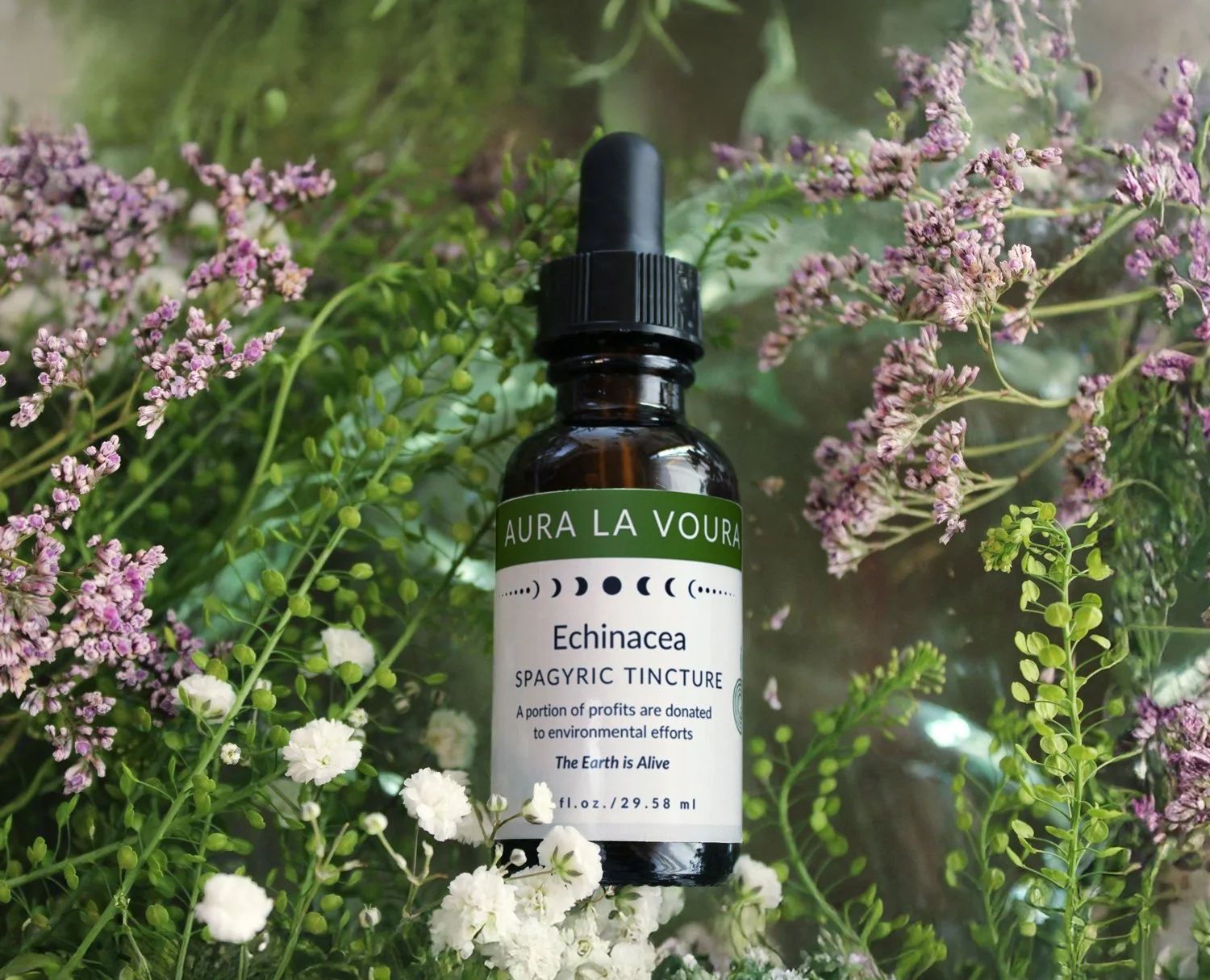
Echinacea is an immune-supporting herb, historically taken at the first signs of illness or during times of increased susceptibility. Aiming to nourish the immune & lymphatic systems
Echinacea (Echinacea angustifolia) contains compounds such as alkylamides, polysaccharides, and caffeic acid derivatives
Echinacea (laevigata, pallida, Echinacea paradoxa var. bushii) is threatened and endangered, we only utilize Echinacea angustifolia in our extraction process. Our pricing structure represents our sourcing.
Ingredients: Echinacea (Echinacea angustifolia) | Mineral Salts | White Vinegar | Certified Organic Cane Alcohol (70-85%) & Distilled Water
Ratio 1:3
This statement has not been evaluated by the Food and Drug Administration. This product is not intended to diagnose, treat, cure, or prevent any diseases.
*Intended to be used in short, intentional intervals rather than long-term daily use. Working with the body in moments of demand, then stepping back once balance is restored *
Echinacea is an immune-supporting herb, historically taken at the first signs of illness or during times of increased susceptibility. Aiming to nourish the immune & lymphatic systems
Echinacea (Echinacea angustifolia) contains compounds such as alkylamides, polysaccharides, and caffeic acid derivatives
Echinacea (laevigata, pallida, Echinacea paradoxa var. bushii) is threatened and endangered, we only utilize Echinacea angustifolia in our extraction process. Our pricing structure represents our sourcing.
Ingredients: Echinacea (Echinacea angustifolia) | Mineral Salts | White Vinegar | Certified Organic Cane Alcohol (70-85%) & Distilled Water
Ratio 1:3
This statement has not been evaluated by the Food and Drug Administration. This product is not intended to diagnose, treat, cure, or prevent any diseases.