
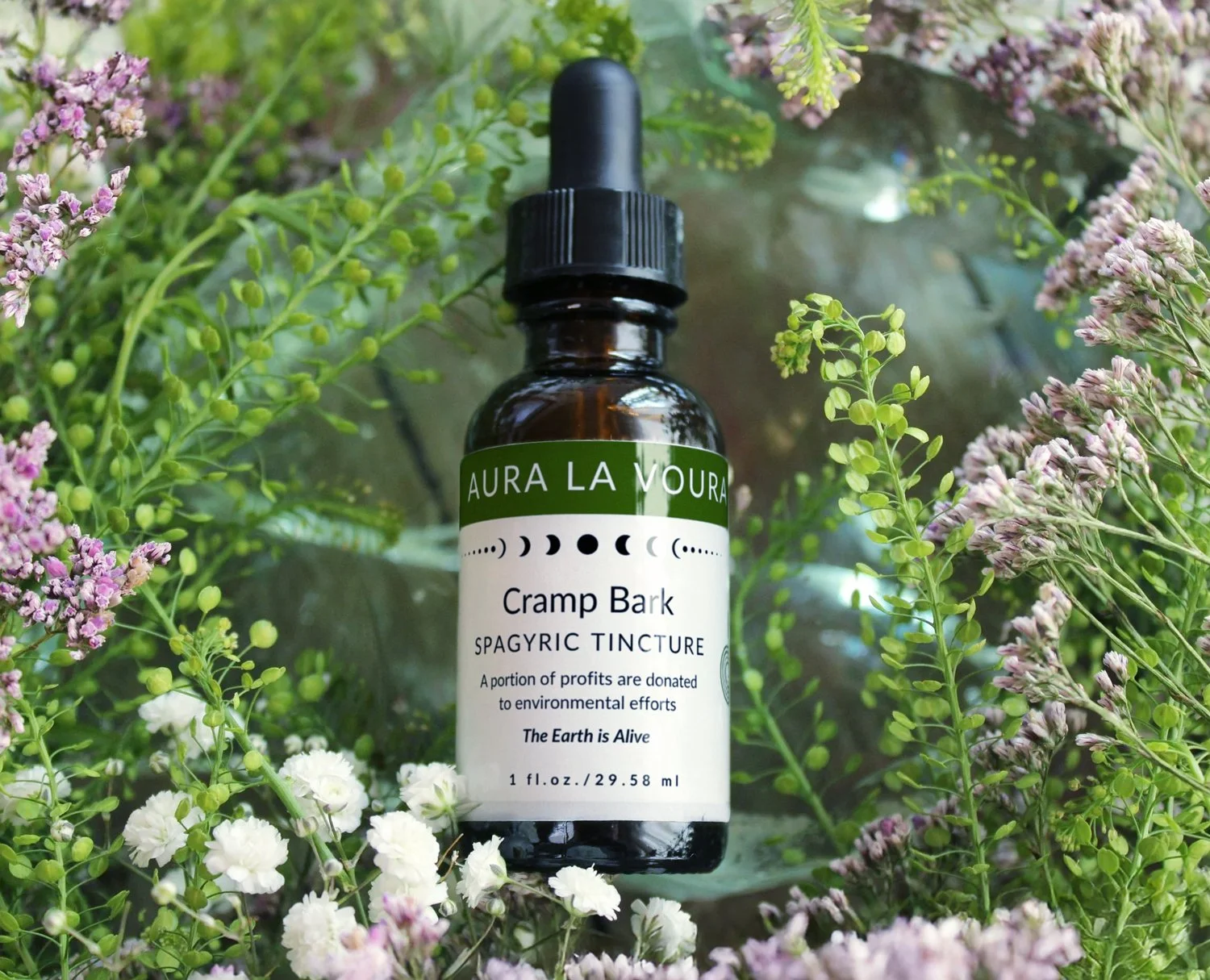
Crampbark is a traditional antispasmodic herb used to ease tension held in the muscles particularly where constriction, or cramping is present. It is most commonly turned to for menstrual cramps, but its use extends to muscle spasms, digestive cramping, and nervous system tension held in the body.
It may work by helping smooth muscle relax, allowing the body to release patterns of contraction that can become painful when sustained. Rather than overriding the body, Crampbark supports a softening by reducing the intensity of spasms while maintaining natural movement and function.
Crampbark (Viburnum opulus) contains compounds such as valerenic acid derivatives, coumarins, and flavonoids, which have been studied for their antispasmodic and mild sedative effects. Through these actions, it may help ease uterine cramping, calm digestive discomfort, and settle tension that arises from stress or nervous system strain.
Traditionally, it has been used both acutely and preventatively taken at the onset of cramping or used consistently leading up to cycles to reduce severity over time. Its action is gentle but reliable, offering support where the body is holding too tightly.
Crampbark is a traditional antispasmodic herb used to ease tension held in the muscles particularly where constriction, or cramping is present. It is most commonly turned to for menstrual cramps, but its use extends to muscle spasms, digestive cramping, and nervous system tension held in the body.
It may work by helping smooth muscle relax, allowing the body to release patterns of contraction that can become painful when sustained. Rather than overriding the body, Crampbark supports a softening by reducing the intensity of spasms while maintaining natural movement and function.
Crampbark (Viburnum opulus) contains compounds such as valerenic acid derivatives, coumarins, and flavonoids, which have been studied for their antispasmodic and mild sedative effects. Through these actions, it may help ease uterine cramping, calm digestive discomfort, and settle tension that arises from stress or nervous system strain.
Traditionally, it has been used both acutely and preventatively taken at the onset of cramping or used consistently leading up to cycles to reduce severity over time. Its action is gentle but reliable, offering support where the body is holding too tightly.