
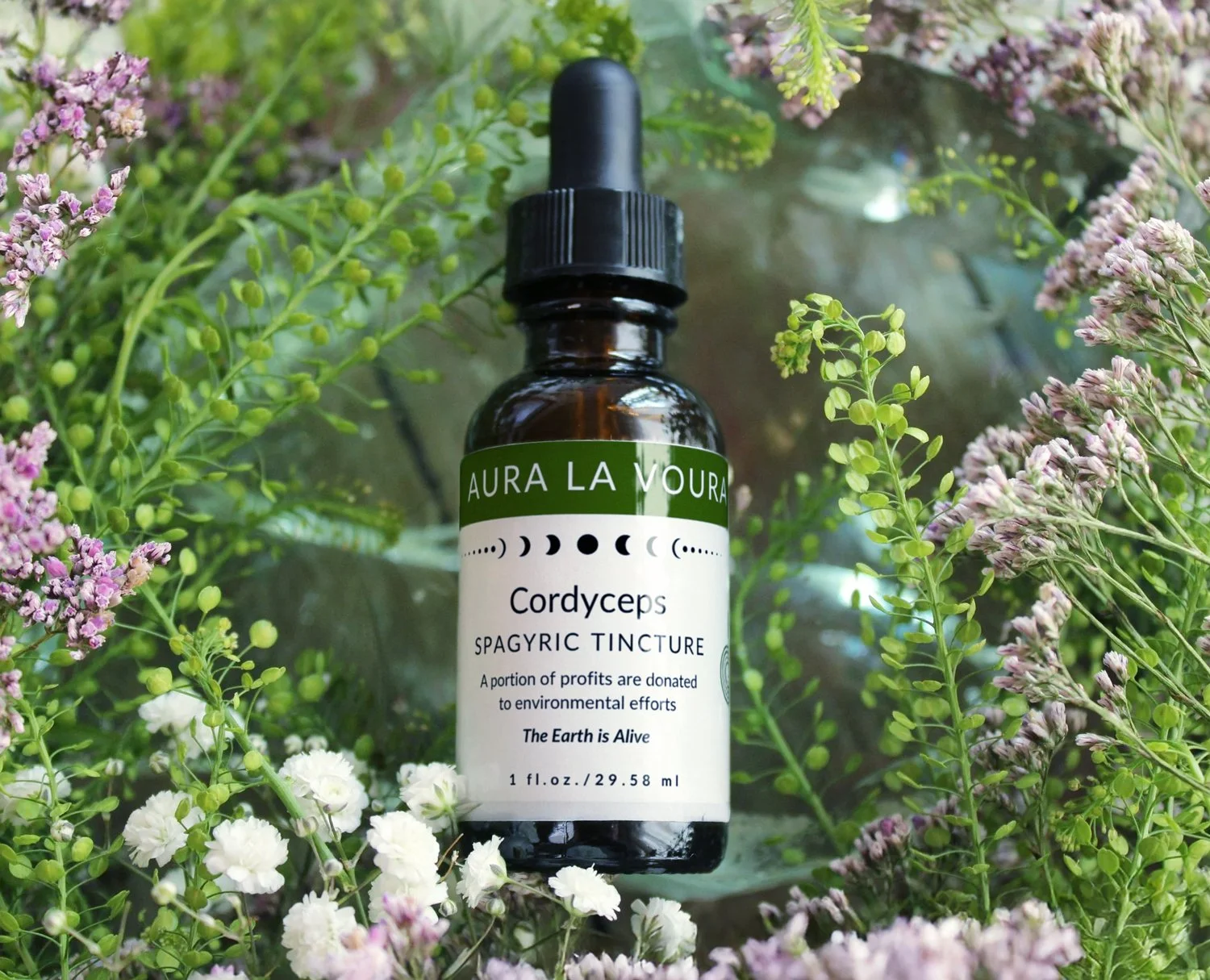
Cordyceps is a mushroom traditionally used to support energy, endurance, and recovery.
Cordyceps (Cordyceps militaris / sinensis) contains compounds such as cordycepin and adenosine, which have been studied for their role in cellular energy production and metabolic function* Although this is not guaranteed.
Its effects are not sharp or immediate, instead they are gradual, working over time to rebuild energy, and restore a more steady relationship to effort and output.
Ingredients: Cordyceps (Cordyceps militaris / sinensis) | Mineral Salts | White Vinegar | Certified Organic Cane Alcohol (70-85%) & Distilled Water
Ratio 1:3
This statement has not been evaluated by the Food and Drug Administration. This product is not intended to diagnose, treat, cure, or prevent any diseases.
Cordyceps is a mushroom traditionally used to support energy, endurance, and recovery.
Cordyceps (Cordyceps militaris / sinensis) contains compounds such as cordycepin and adenosine, which have been studied for their role in cellular energy production and metabolic function* Although this is not guaranteed.
Its effects are not sharp or immediate, instead they are gradual, working over time to rebuild energy, and restore a more steady relationship to effort and output.
Ingredients: Cordyceps (Cordyceps militaris / sinensis) | Mineral Salts | White Vinegar | Certified Organic Cane Alcohol (70-85%) & Distilled Water
Ratio 1:3
This statement has not been evaluated by the Food and Drug Administration. This product is not intended to diagnose, treat, cure, or prevent any diseases.