
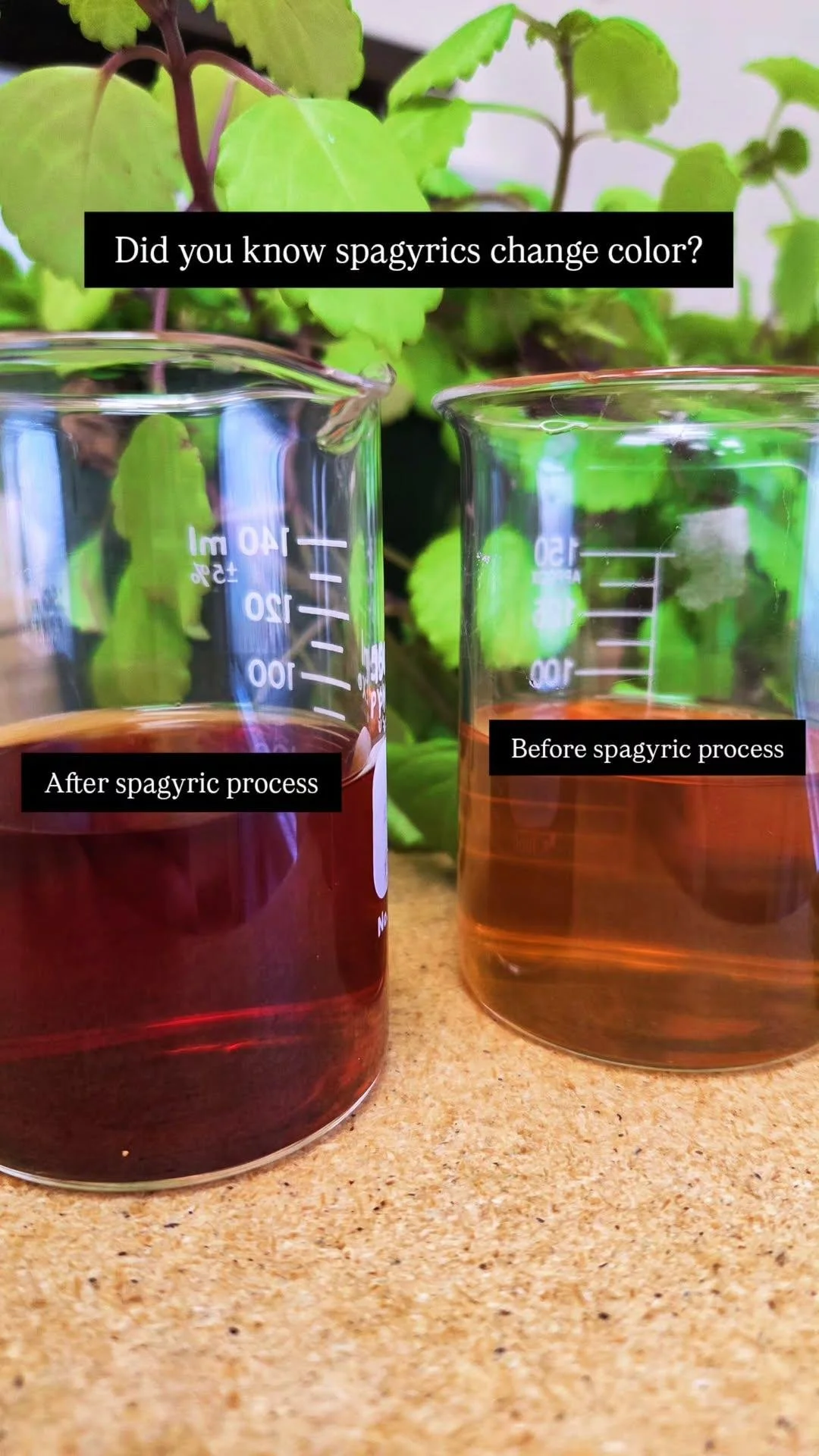
What is the difference between a botanical tincture and a spagyric tincture?
A botanical tincture and a spagyric tincture start with the same plant, but they extract completely different chemistries.
A botanical tincture is made by soaking plant material in alcohol and water. This pulls out alcohol-soluble and water-soluble compounds. After straining, the plant matter (called the marc) is discarded. Chemically, a tincture contains only what is soluble in alcohol and water. The minerals, and many bound nutrients remain locked inside the leftover plant fiber.
A spagyric tincture adds another phase of processing. After the initial tincture is strained, the spent plant material is burned to ash and heated until its minerals become water-soluble salts. This process, known as calcination, breaks open the rigid cell walls and releases minerals that normal tinctures never capture like potassium salts, calcium, magnesium, trace elements, and other inorganic constituents. These salts are then dissolved, purified and reunited with the tincture in a particular way.
This creates a full-spectrum extract:
Organic compounds (alcohol/water soluble)
Volatile compounds (aromatics and essential oils)
Inorganic mineral salts (made bioavailable through calcination)
In ecology and biochemistry, this mirrors what the Earth does through decomposition and mineral cycling. Breaking down plant matter so its nutrients can re-enter living systems. Spagyrics mimic these same biogeochemical processes on a small scale.
Because the mineral salts gently shift the tincture’s pH, and molecular environment, many compounds may possibly have become more bioavailable, meaning easier for the body to recognize and sometimes process. The presence of electrolytes and trace minerals can also subtly alter how the extract interacts with the nervous system and tissues, a phenomenon documented in traditional alchemical texts and increasingly supported by modern phytochemistry.
In short: A botanical tincture extracts the soul and spirit of a plant but a spagyric tincture also gives you the bones.